Master Thesis
Ecosystem Strategies
for Urban Co-Habitation:
This thesis proposes a new design framework aimed at redefining architectural and urban planning processes to prioritise cohabitation and biodiversity, ensuring that human and more-than-human entities coexist in a balanced, mutually beneficial ecosystem. The primary goal is to shift away from anthropocentric design practices, which often prioritise human and economic interests, and to foster an integrated approach where ecological and human needs are equally valued. This new framework is designed to create resilient ecosystems that enhance climate adaptability and biodiversity, which are crucial for sustainable development. The theoretical underpinnings of this framework draw on Multi-Species Design and More-than-Human theories, applying these concepts throughout various stages of the architectural process—from site analysis to design implementation. By integrating an Ecosystem strategy, this framework mimics the structure and functionality of natural ecosystems at the program development stage, ensuring functional symbiosis between all stakeholders and environmental elements. This approach facilitates the equitable distribution of resources and consideration, promoting a sustainable coexistence that is responsive to the needs of a diverse range of species. One of the key innovations of this framework is the development of eight chronological strategies that revolutionise the traditional pre-design workflow. These strategies introduce a new focus on analysing and prioritising the needs of more-than-human agencies, effectively challenging and replacing the normative anthropocentric design processes. As a result, the proposed framework enables the design of spaces that are not only less harmful but actively contribute to the resilience of urban and natural environments against climate change and ecological challenges. This thesis sets the stage for a shift in architectural and urban planning paradigms, advocating for a co-creative process where design is not merely a human endeavour but a collaborative inter-species act. Future developments will require adaptation to different geographical contexts and climates, calling for ongoing collaboration to refine and apply these principles universally.
Download the full Masterthesis from TU Graz online library here.
Download the full Masterthesis from TU Graz online library here.
The Framework
Of existing elements
Once the project site is established, it is crucial to analyze the surroundings socially and spatially across appropriate scales. This ensures the regenerative aspect of developed strategies, as extensive analysis can provide socio-cultural information relevant to creating a defined sense of place.
The analysis should vary across scales, including broader regions like districts or communities, surrounding urban fabric and structures, and zooming in to the site itself. In this step, existing elements such as flora and fauna must be identified and analyzed within the new elemental framework.
These elements vary depending on the site’s individual circumstances, such as water, ground composition, topography, or specific climate conditions.
Once the project site is established, it is crucial to analyze the surroundings socially and spatially across appropriate scales. This ensures the regenerative aspect of developed strategies, as extensive analysis can provide socio-cultural information relevant to creating a defined sense of place.
The analysis should vary across scales, including broader regions like districts or communities, surrounding urban fabric and structures, and zooming in to the site itself. In this step, existing elements such as flora and fauna must be identified and analyzed within the new elemental framework.
These elements vary depending on the site’s individual circumstances, such as water, ground composition, topography, or specific climate conditions.
Stakeholder Matrix
To identify and rank important stakeholders for the project, the matrix should include parameters of interest and influence.
Initially, each element should be evaluated independently, entailing stakeholders identified through the different scopes of the analyses.
Subsequently, stakeholders can be merged into a single matrix, where evaluations between different element stakeholders are made coherently with the overall matrix as a support.
It is crucial that stakeholders typically not considered in these matrices, such as components of flora and fauna, are included and given equal consideration as their human counterpart.
To identify and rank important stakeholders for the project, the matrix should include parameters of interest and influence.
Initially, each element should be evaluated independently, entailing stakeholders identified through the different scopes of the analyses.
Subsequently, stakeholders can be merged into a single matrix, where evaluations between different element stakeholders are made coherently with the overall matrix as a support.
It is crucial that stakeholders typically not considered in these matrices, such as components of flora and fauna, are included and given equal consideration as their human counterpart.
From all elements
Following the evaluation of the stakeholder matrix, all stakeholders are viewed with equal consideration and undergo a selection process to determine which are directly relevant and existent or need to be introduced on site.
These protagonists will play an active role in the development of the project.
The transition in naming from stakeholder to protagonist and the differentiation of potential main protagonists establish a change in narrative for collective, cohesive, and rich storytelling, setting the stage for the next conceptual phase.
Following the evaluation of the stakeholder matrix, all stakeholders are viewed with equal consideration and undergo a selection process to determine which are directly relevant and existent or need to be introduced on site.
These protagonists will play an active role in the development of the project.
The transition in naming from stakeholder to protagonist and the differentiation of potential main protagonists establish a change in narrative for collective, cohesive, and rich storytelling, setting the stage for the next conceptual phase.
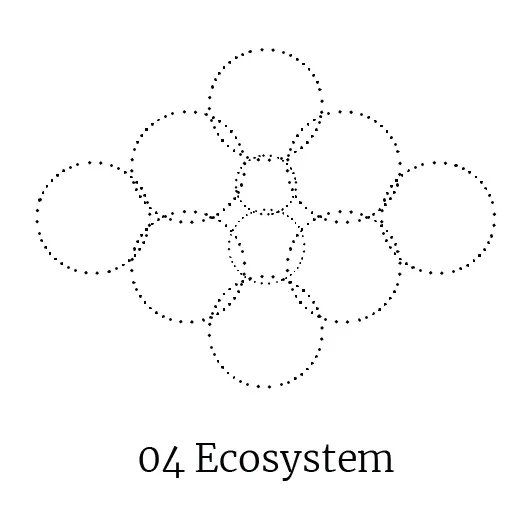
& symbiotic relationships
Utilizing the framework of an ecological ecosystem, the active programmatic project components will be set.
To ensure cohabitation at a later stage, each subsystem within the overall ecosystem must include protagonists or categories of all defined elements. These elements act as supporting co-elements toward the element which entails the main protagonist of the subsystem.
The number of subsystems varies depending on project size, but at least one of each element (for example human, flora, fauna, and water) should be guaranteed as a main protagonist. as water, ground composition, topography, or specific climate conditions.
Utilizing the framework of an ecological ecosystem, the active programmatic project components will be set.
To ensure cohabitation at a later stage, each subsystem within the overall ecosystem must include protagonists or categories of all defined elements. These elements act as supporting co-elements toward the element which entails the main protagonist of the subsystem.
The number of subsystems varies depending on project size, but at least one of each element (for example human, flora, fauna, and water) should be guaranteed as a main protagonist. as water, ground composition, topography, or specific climate conditions.
For equally distributed elements
The metric measurement depends on the scale of the site and its elemental components. The metric involves spheres, with each dedicated to an individual element.
The goal is an equally distributed and evolved set of elements on the site, presenting the previously set ecosystem in an abstract, spatial configuration.
Evolutions should be planned with at least two stages, the first being the initial set, generated with intrinsic knowledge and the application of the ecosystem concept. Subsequent evolutions, ideally two or more, will be simulations ensuring equal growth distribution among the elements, with artificially generated data tailored to the site’s specific location and climate.
The metric measurement depends on the scale of the site and its elemental components. The metric involves spheres, with each dedicated to an individual element.
The goal is an equally distributed and evolved set of elements on the site, presenting the previously set ecosystem in an abstract, spatial configuration.
Evolutions should be planned with at least two stages, the first being the initial set, generated with intrinsic knowledge and the application of the ecosystem concept. Subsequent evolutions, ideally two or more, will be simulations ensuring equal growth distribution among the elements, with artificially generated data tailored to the site’s specific location and climate.
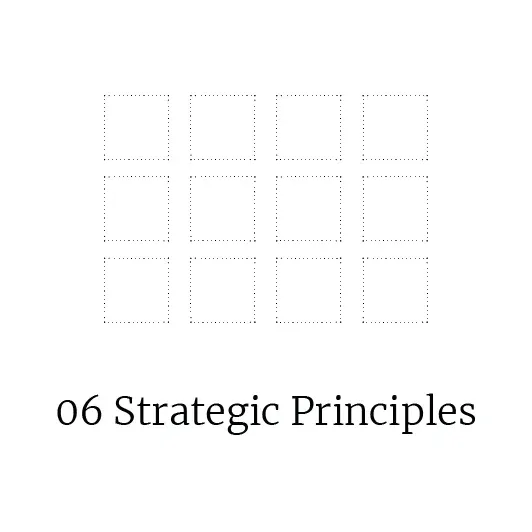
And assigned Toolkit assets
Overall design principles such as a new aesthetic, enabling nature, and spatial re-allocation provide a unified application of the ecosystem program and metric on the site.
These principles should further have specific toolkit assets, fostering the individual element as well as the symbiotic relations in an architectural manner.
The toolkit assets, applicable to all subsystems, should be specific yet capable of unique spatial translation in the later design.
Overall design principles such as a new aesthetic, enabling nature, and spatial re-allocation provide a unified application of the ecosystem program and metric on the site.
These principles should further have specific toolkit assets, fostering the individual element as well as the symbiotic relations in an architectural manner.
The toolkit assets, applicable to all subsystems, should be specific yet capable of unique spatial translation in the later design.
In micro & macro scale
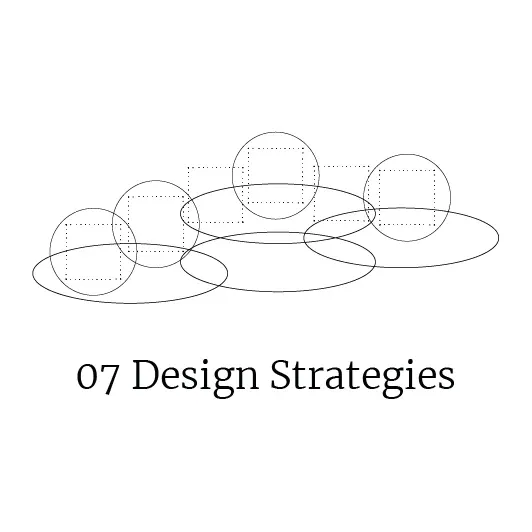
The design strategies are the directly applied and merged systems of the ecosystem program, according to the metric with dedicated spaces for each individual element, translated as strategic components of the toolkits.
This complex strategic development occurs on the scales of the individual subsystems and their specific needs, as well as on the macro scale of the overall system, ensuring overlap and synergies that foster resilience and ensure cohabitation.
This process demands fluid transitions between micro and macro scales, viewing subsystems as smaller individual projects needing their own strategic application and translation.
The design strategies are the directly applied and merged systems of the ecosystem program, according to the metric with dedicated spaces for each individual element, translated as strategic components of the toolkits.
This complex strategic development occurs on the scales of the individual subsystems and their specific needs, as well as on the macro scale of the overall system, ensuring overlap and synergies that foster resilience and ensure cohabitation.
This process demands fluid transitions between micro and macro scales, viewing subsystems as smaller individual projects needing their own strategic application and translation.
With interdisciplinary specialists
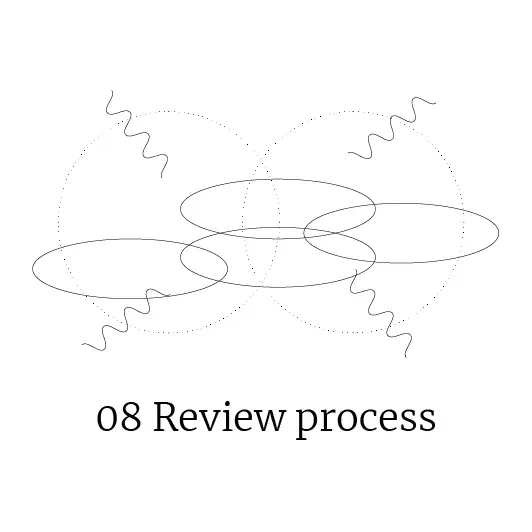
After the strategic application, the assigned toolkit assets can be evaluated on the individual subsystems, aiming for at least 50% fulfillment, as well as the sum of all possible applicable toolkit assets for all subsystems to evaluate the potential of the fully developed ecosystem.
As part of the review, each strategic application of the subsystems should be assessed individually with specialists from interdisciplinary fields like ecology, to ensure the symbiotic relations can develop and sustain themselves.
After the strategic application, the assigned toolkit assets can be evaluated on the individual subsystems, aiming for at least 50% fulfillment, as well as the sum of all possible applicable toolkit assets for all subsystems to evaluate the potential of the fully developed ecosystem.
As part of the review, each strategic application of the subsystems should be assessed individually with specialists from interdisciplinary fields like ecology, to ensure the symbiotic relations can develop and sustain themselves.